Blog

  • Les Longpré – Chapter 1

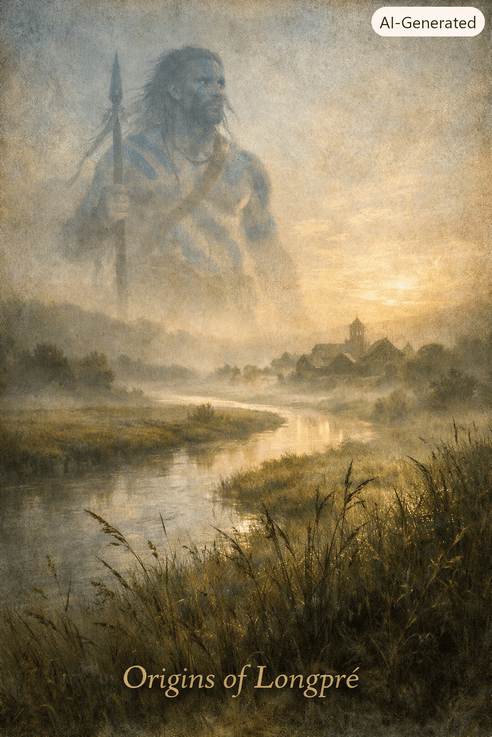
    In the two hundred years since Alba and Gyr journeyed to the sacred stone, fewer and fewer young couples made the journey from scattered villages. The Church wisely folded local folklore into their attempts to convert the pagans who held fast to the old ways. In Inverugie, the village where Alba and Gyr returned and raised a family, had become prosperous enough that it allowed the Church to accumulate a small fortune in treasures. The priest had been joined by a few more monks, including two young men from the village. Word of the church’s riches spread along the coastal region, reaching the Western Isles, a group of islands claimed as a small kingdom by Kettil Bjornsson, the Flatnose.

    Kettil’s youngest son, Hrólfr, had just turned thirteen and was already as big as most of his men. His older son, Gurim was old enough to captain his own longboat. The pull of treasures was all that was needed for a season of viking. Hrólfr needed to be blooded if he was to become a captain of his own longboat. Their mother was a Dane from Heiðabýr, Danmǫrk. Hrólfr took after his mother’s family in size and stature while Gurim was obviously Kettil’s son in appearance and temperament.

    “You sail with me,” Kettil told Hrólfr.

    ~

    The flotilla of longboats entered the mouth of the River Ugie. Seeing their approach, many of the villagers disappeared into the peat bogs carrying their most prized possessions, their children. It had been years since the last raid which had seen their young women taken as captives.

    Hrólfr had shown ferocity as he wielded a long sword. Kettil had his trusted second in command, Thórólfr, and Gurim to fight alongside Hrólfr. Despite his size, Hrólfr was just a youth. As the men rushed to the shore, Hrólfr held back, waiting to see the bigger scene. He saw a villager disappear down a back lane, away from the charge. Hrólfr waited a few moments to see the warriors commit to their targets, then he turned to follow the villager.

    He found the villager standing in front of a rough-looking shed, holding a sharpened pitchfork. With him were two other men. They glared at Hrólfr as though daring him to make a stupid move. With a burst of unexpected speed, turning to avoid the pitchfork, Hrólfr struck with his sword. The villager was left holding his stomach as his entrails began to escape the wound inflicted.

    Not stopping to finish off the villager, Hrólfr felled the most dangerous of the two remaining men, with a mighty swing which removed the arm holding a staff with a knotted club. The third man took off at a run. It was just then that Thórólfr emerged from behind a wagon. He had watched the scene unfold, ready to save the youth if needed.

    “You risked yourself needlessly, Hrólfr,” he said with a seriousness that surprised Hrólfr. “You know full well that we fight together, protecting each other.”

    Hrólfr stopped smiling at his easy victory. Thórólfr had spoken truth. There was a code for the warriors. It was his first turn at viking, and he had already broken that code. 

    ~

    Children and elders were left alone, while men were slain defending their homes. Once victory had been claimed with the looting of the church, Kettil’s men took their pleasure with the surviving women. With so many of the village men felled, some of the women were claimed by the Norsemen. Life with a man was hard enough, but not to have a man to protect her and provide for her and her children would have been a fate worse than death. Being claimed by a Norseman was a chance to survive. Few protested. Those that did were slain. Those not claimed were left to live in the village when the warriors left.

    Kettil didn’t engage in the celebratory activities nor did Thórólfr who brought Hrólfr to his father. Gurim was with the rest of the men.

    “Kettil, your son has something to tell you.”

    Kettil had seen Hrólfr leave the group. He had also seen Thórólfr follow the lad into the village. Thórólfr moved silently like a wolf tracking prey. Hrólfr was too intent on his own prey to sense being followed.

    “Faðir, I took a needless risk in leaving the other men. I was curious about a villager who appeared to be going to his own small treasures to perhaps hide them.”

    “And?”

    “He was met by two other men who were armed. When the man I was following turned to attack me, I gutted him. Then as one of the other two moved to strike me with a long-shafted club, I cleaved off his arm. The third man fled.”

    “What about the treasure? You said you followed him in search of more treasure.”

    “I … I didn’t think of treasure at that point. When Thórólfr appeared, I realised that I had not followed your instructions. I have shamed you and myself.”

    ~

    The next morning, Kettil and his small flotilla left Inverugie behind. Kettil had an unspoken objective somewhere on River Samara. With hard sailing, it was a journey that would take seven days. Kettil was in no rush as he wanted to give his men another opportunity to viking before reaching the river. He planned on pushing for three days to reach a place called Grimr’s village. There they would enjoy Danish hospitality and replenish their water and food supplies.  A night of conviviality with compatriots would do his men good. Kettil used the opportunity to learn more about what had been happening in the wider world. Information was vital.

    Another two days took them to Gipeswic, at the mouth of a large bay which split into three rivers.  The coastal village provided an opportunity to gather more treasure and satisfy the hunger of viking. 

    The speed and surprise of their attack had the haul of treasure exceed the riches gathered at Inverugie. Kettil wasted no time in pulling away from the coastline following the raid. It was time to cross to reach the River Samara.

  • Les Longpré – Prologue

    Alba walked beside Gyr as they crossed the field headed towards the sacred stone. Her grandmother talked about a goddess and a god who appeared at the stone thirty springs ago. Alba wondered if she would get to see a god and goddess like her grandmother. She wanted to have blessings for fertility and have many children with Gyr.

    They had walked for two days from their tiny village to the east along the River Ugie, not far from the endless cold sea off the coast. Gyr carried a wicker basket on his back with a small collection of trade goods. Alba’s basket held foodstuffs which they would eat on the way back to their village. They had been fasting for three days and wouldn’t eat until the sacred ceremony was conclude. Alba had been born fifteen springs earlier, the fifth daughter and seventh child of her parents. Gyr was one summer older than her.

    “Alba, the villagers told us we should reach the sacred stone not long before the sun is highest. It can’t that much further.”

    “You’re right, Gyr. The path through the grass is well trodden and offers faster passage than when we walked at the edges of the bogs.”

    “The villagers said that others all ahead of us on the trail. We won’t be alone. A seer will be there to guide us,” Alba added. “I hope the shells will gain the goddess’s favour.”

    “My flint knife will undoubtedly earn approval.”

    Gyr had learned quickly the trade of his father who crafted tools for his home villagers.

    They became aware of the sacred stone as they saw couples standing near what could only be the sacred stone. Gyr and Alba hurried their steps not wanting to miss the sacred invocation.

    Sitting near the stone, an old woman was preparing an infusion. Alba recognized the mugwort which was being brewed. There was a woman in her village who brewed a herbal infusion for medicinal use, as well as for the Seer’s use at holy festivals. A white-bearded old man stood behind her as though waiting for the potion to be ready. There was no doubt in Alba’s mind that he was the seer who would call upon the immortals. Alba nudged Gyr and nodded toward the old man before whispering, “He is waiting. We aren’t late my husband-to-be.

    Gyr nodded without adding any words. The two had spoken quietly along their journey about keeping their purpose unexplained. The priest in the village was brutal in his attempts to stamp out paganism.

    Moments before the sun rose to its highest position, another couple arrived. The seer moved to stand beside the stone while the old woman went from couple to couple to have them drink the infusion using their own wooden cups. When all had swallowed the brew, they sat in a semi-circle in front of the seer.

    They waited for what seemed unending time though the sun’s position told anyone watching that it wasn’t long after midday when the seer began to speak.

    ~

    Alba didn’t hear the words as she sat, she felt them reach into her centre. Her eyes caught the shimmering of light as two figures emerged. The goddess with long golden tresses, and a god with a glowing mane of hair that included a long beard.  The goddess smiled

    ~

    The sun had set behind the hills to the west when Gyr woke. He saw Alba, folded onto the grass, still sleeping. He looked around. The sacred stone stood where he had seen it at midday. However, the old woman and the seer were no longer by the stone. All that remained were the scattered couples still sleeping.

  • Les Longpré

    I am finally getting serious about a historical fiction that looks at how my family came to be in this modern world. The earliest known Longpré was mentioned in an obscure work where a Guillaume Longpré was supposedly in a minor supporting role at the Battle of Hastings in 1066. Of course, the family didn’t begin then. He had parents, grandparents and the roots go far, far back in time. For this story, I am starting in the middle of the seventh century.

    I had my DNA analysed and found out that the roots, my roots, are tied to Northern France, Scotland, and the Norse peoples that we know as Vikings. There are others in the DNA mix, but they are not as prominent. It was this knowledge that had me begin in Scotland. I am writing the story in Parts. The prologue sets the scene in what is today called Aberdeenshire, the homeland of the Picts, a mysterious people with Celtic associations. The Picts didn’t disappear, they became absorbed over the years.

    The Longpré name comes from what we know as Longpré-les-Corps-Saints. Before 1205 AD, the place had the name Longpré. And before that it was called Longum Pratum in 1066 AD. All of that is in written historical documents. The neighbouring town of Long was called Longus Superior in 855 AD, then Longo, and then Longum. That is what history tells us about these two villages which are less than five kilometres apart. Both places existed long before written records mention them. It is most likely that the village of Long was the first town and that its own people build habitations in the meadows which gave rise to “long-meadows” or Longpré.

    The Romans mentioned villages in the area and there is archaeological evidence of villages dating from the time of Caesar being there in 57 BC. The people living in the area were Celtic and called Ambiani. And so it goes on and on backwards in time. There is no way I am going to track all of this as it would be an impossible task. What leads me to begin in Scotland in the middle of the 600s is what I can best call a woad culture, a warrior culture which is matched by a woad culture in Denmark and in France along the river where the villages of Long and Longpré are found.

    The story which will emerge here is one that tells the plausible story of a land that eventually gave rise to the Longpré family. Though the story will have real historical figures, the novel isn’t about them. In the end, it is the story of a family that passes through me to my grandsons, a thread that adapts to the passing centuries, blending other families in the process.

    Should I have started the story in the late 1600s when the family arrived in North America from Rouen, France? I thought long and hard about this. My friend, Yann Longpré has written an encyclopaedic two-volume series which is replete with family trees dating back to the Guillaume Longpré’s arrival. That isn’t a story and I want to write a story.

  • ADD And Getting Older

    Seventy-seven years old

    There is no doubt about it. It is getting harder to focus on a task and finish it. There have been changes made to this site and there are more changes to come. I know that you, as a reader here, deserve to have this site fully functional with a full listing of my books and even options to buy via major online outlets. But getting older somehow enabled my attention-deficit to have freer rein. I just turned seventy-seven.

    I am not sure if it is the realisation that I have a seriously shrinking number of days, weeks, months, years left, or that I am already losing my mind, bit by bit. Regardless, I have as many writing projects begun as I have published. I’d have to live to a hundred and twenty-five to finish what has been started.

    I have been experimenting with a new genre for me, dystopian stories. To tell the truth, I can’t seem to like the three stories that I’ve started. They just can’t hold my interest and they fall off my radar. I can create the story with a decent plot but if it is to be truly realistic dystopian, it can’t help but be boring. There is no knight in shining armour to ride in and save the day. Life is gray and the world swallows up attempts at heroism. In a true dystopia, people adapt and do their best just to survive. I can’t write like that.

    So, I am back to writing what I love, improbable tales and plausible historical stories. Oh, and I can’t forget – and finish book three of the Space Cadet series.

  • The River and the Fisherman

    A moment along the Mekong River in Laos

    Photo by author taken in Laos

    They say the Mekong is a river only in the way a body is a body. Those who live along its banks step toward the water with a quietness that borders on reverence, as though approaching an elder who has seen too much to be impressed by human urgency.

    The young man who came each morning did not bow, but he paused. That small hesitation was his offering. His name was Somchai, though the villagers usually shortened it to Chai, a name easier to say. He was nineteen, but the river had already begun its slow work on him seen in the way he listened, the way he moved with a patience that did not belong to youth.

    He stood barefoot on the damp bank, in the early light. Smoke from distant cooking fires drifted in thin threads behind him. The river held its usual calm, but beneath that calm he sensed a stirring, the kind that has nothing to do with weather or tide.

    He lifted his net and cast it in a wide, practiced arc. The net opened above him like a breath released, then settled onto the water.

    Chai waited, not with impatience but with the quiet attention of someone who has learned that the river does not respond to force. His father had taught him that before the fever hollowed him out, leaving Chai with a net, a family to feed, and a grief that settled into him like sediment.

    The surface of the water shimmered. He pulled the net.

    It rose with weight, but not the familiar, wriggling weight of fish. This was a different heaviness, the kind that belongs to objects that have waited a long time to be found.

    When the net broke the surface, he saw only a single stone caught in its mesh.

    It was smooth, shaped by years of water, but etched with markings that resembled script. He held it in his hands, and something in him shifted, the way a locked door sometimes shifts when the right key is near.

    He knelt at the water’s edge. The river was quiet as though it were listening.

    I don’t know what you want,” he said, his voice barely heard above the sound of the current. “I only know I need to feed my family.”

    The water touched the shore in a slow, deliberate rhythm, as though acknowledging the truth of his words.

    He looked again at the stone. The markings seemed to pulse, not with light but with intention. He placed the stone on the water.

    It floated.

    It drifted outward, turning slowly, as though guided by a current he could not feel. For a moment, the river’s surface deepened, revealing shapes beneath it, their movements belonged to another order of being, something fluid and ancient.

    He blinked, and the shapes dissolved.

    The stone stopped a few feet from shore.

    A voice rose then. It was neither male nor female, neither young nor old. It carried the timbre of something that had never needed to raise its voice.

    You cast your net for fish, but the river casts its net for you.

    Chai felt his breath catch.

    You carry more than hunger,” the voice continued. “You carry the weight of those who depend on you, the ache of what you have lost, the fear of what you cannot shape.

    The words named what was already true.

    But you also carry patience,” the voice said. “And a listening heart. These are the qualities the river recognizes.

    The stone drifted back toward him, as though returning something he had not realized he had offered.

    You are not alone,” the voice said. “The river remembers your father. It remembers your grandmother. It remembers every hand that has ever cast a net in hope or in despair. It remembers you.

    He lifted the stone from the water. It felt warm now, as though it had absorbed something from the river.

    What am I meant to do?” he whispered.

    Fish,” the voice said. “But not only with your hands. Fish with your memory. Fish with your grief. Fish with the understanding that you are part of something larger than your hunger.

    The shimmer faded. The river returned to its ordinary calm, though Chai sensed that nothing was quite the same.

    He cast his net again.

    This time, when he pulled, the weight was familiar with the solid, wriggling weight of fish. More than he had caught in weeks. Enough to feed his family for days.

    He did not smile with triumph. He simply breathed, deeply, as though the river had lent him a breath of its own.

    He gathered his net, tucked the stone into his bag, and began the walk home. The morning light warmed his shoulders. The fish weighed down his hands.

    He did not look back at the river. He didn’t need to. He could feel it watching him.

  • The Hands of Humanity

    This story must be told, not because it is ancient, though it is, and not because it is sacred, though it might be, but because it speaks to something that has always lived quietly inside the human heart.

    Long before the first cities rose, before the first names were spoken, before the first grief carved its hollow into the chest of the world, there was a tree that grew in the space between what is seen and what is felt. It did not grow in soil, though it had roots. It did not reach toward the sun, though it had branches. It was a tree spanning many worlds. It still exists in the place where the visible world thins enough for the invisible to show through.

    Some called it the First Tree. Others called it the Listening Tree. But the oldest name, the one whispered by those who still remembered the shape of the world before language, was the Tree Beneath the Skin of the World. The Norse called it Yggdrasil.

    Its trunk glowed with a deep, ember-red warmth, as though was lit from within by a memory of fire. Its branches spread outward in intricate patterns, splitting and re-joining, weaving themselves into shapes that resembled the branching of rivers, the pathways of lightning, the delicate threads of the human mind. Roots mirrored branches reaching downward with the same complexity, as though the tree was a bridge between two realms .

    And holding the tree were two human hands. They were not the hands of a single person. They were the hands of humanity itself, shaped by every gesture ever made in kindness, every touch offered in comfort, every moment when one being reached toward another with the simple desire to care. These hands were not perfect. They bore scars, calluses, lines etched by time and labour. But they were steady, and they were gentle, and they held the tree with the reverence of someone holding a new baby.

    This story begins on a day when the world felt heavier than usual, though nothing in particular had happened to make it so. A young woman walked alone through a valley she had never visited before. She had lived her life with a quiet diligence, doing what was expected, offering what was needed, carrying what was asked of her. But something inside her had begun to shift, like a tide turning beneath the surface of the sea.

    She followed a narrow path that wound through the valley, the air warm against her skin, touched with the faint scent of something sweet — not flowers, not fruit, but something that reminded her of childhood afternoons when the world felt larger than she could understand. The sky above her was neither dawn nor dusk, but something in between, as though time itself had paused to listen.

    The tree stood at the centre, glowing softly, its branches and roots weaving patterns that made her breath catch. The colours around it moved in slow spirals, as though the world were exhaling in her direction. And the hands, those immense, gentle hands held the tree with a tenderness that made her chest ache.

    She stepped closer, drawn by something she could not name.

    The ground beneath her feet felt warm, alive. The closer she came, the more she sensed something stirring inside her — not fear, not awe, but recognition. As though some part of her had been here before, long before she had a name or a history.

    When she reached the base of the tree, she placed her hand on the trunk. The bark was smooth, almost like skin, and beneath it she felt a faint vibration, steady and calm, like the heartbeat of a sleeping giant.

    A voice rose then, not from the tree, not from the air, but from somewhere inside her, a voice that was neither male nor female, neither young nor old.

    You have come far to remember what you already know. Sit,” the voice said.

    She lowered herself to the ground, leaning against the warm trunk. The moment her back touched the tree, a wave of memory washed through her, memories of sensations: the feeling of being held, the feeling of belonging, the feeling of being connected to something vast and benevolent. The tree pulsed gently.

    Every life grows tangled,” the voice continued. “Branches twist, roots collide, paths split and re-join. People forget that they are not separate from the world that shapes them. You carry questions,” the voice said. “Not the kind that seek answers, but the kind that seek direction.

    She felt her breath deepen. It was true. She had not come seeking solutions. She had come because something in her had begun to unravel, not in a destructive way but in a way that suggested she was outgrowing the shape of her life.

    The world within you is not smaller that the world around you,” the voice said. “It is simply less explored. Look.”

    She opened her eyes.

    The tree’s trunk had changed. Where her hand had rested, the bark had become translucent, revealing a network of glowing lines beneath the surface. The tree was not a tree. Or rather, it was more than a tree. It was a map of the world, of the self, of the unseen connections that bind everything together.

    Every life is a pattern,” the voice said. “Every choice a branch. Every loss a root. Every hope a leaf waiting to unfurl. You have forgotten how to listen to your own roots. Place your hand here,” the voice said.

    A section of the trunk glowed softly. She pressed her palm against it.

    She was no longer sitting at the base of the tree. She was standing inside it. The branches above her stretched into a sky that was not a sky, but a vast expanse of possibility. The roots below her reached into a ground that was not earth, but memory. Images rose around her, not as scenes but as impressions: moments of joy, moments of fear, moments of hesitation, moments of courage. They moved like currents, weaving themselves into patterns she had never noticed.

    “You are not lost,” the voice said. “You are simply between shapes. Growth is not a straight line. It is a spiral. You return to what you thought you had left behind, only to see it with new eyes. You came here because you are ready to grow in a new direction. But growth requires release. Let go of what no longer feeds you. And trust what is emerging. It is time to return.

    She blinked. She was once again sitting at the base of the tree, her hand resting on the warm bark. The valley was quiet, the colours around the tree calmer now, as though the world had exhaled.

    The voice spoke one last time.

    Carry the pattern with you. It will change as you change. That is its purpose.”

  • Three Boats

    A Decision Has To Be Made

    Photo by author — China 2007

    It was small, barely a curve in the coastline, where the water held a stillness that did not belong to weather, I saw three small boats. The sun hesitated to show its face and though a rain threatened, the world stilled. Even the wind seemed to hesitate before crossing the inlet. The palms leaned inward, as if listening. And three boats tied loosely together, floated with the quiet assurance of things that had been waiting a long time.

    The bay was one of those places in the world which was porous, a place that stands between the world of humans and an alter reality. Standing at the edge of the bay, without knowing why I was there, I sensed the presence of a thin, invisible doorway. 

    I did not step through the portal which waited. I hesitated worried that I would look foolish stepping through space only to disappear or to find myself floundering in the silty water. I stood unable to commit to enter the unseen portal, or to turn my back and walk on. I felt the air shift around me, as though the world were adjusting itself to make room for my decision. Something on the other side of that invisible doorway had noticed me and was waiting to see what I would do.

    The three boats rocked gently, their hulls touching with the soft familiarity as if they were old companions. They were simple vessels, worn smooth by years of sun and salt. Yet each carried a different presence, a different weight. The one on the left was sturdy, its wood darkened by time. The middle boat was partially covered with a tarp of muted colours, as though guarding something fragile. The third spoke of sparseness.

    I stared at the them. I was certain that I had been here before in a dream which I couldn’t fully recall. The portal stood between me and the boats, hovering unseen above the water. As I stood, caught between worlds, a voice drifted toward me, as soft as the first stir of wind.

    “You came early.”

    I turned to see who had spoken. An old woman stood among the palms, her posture straight, her eyes bright with the kind of clarity that comes from having lived long enough to stop pretending. She wore no expression of surprise at finding me there. If anything, she looked faintly relieved.

    “I didn’t know I was expected,” I said.

    “People rarely do,” she replied. “But the bay knows. It calls those who have begun to outgrow their own lives.”

    She walked to the water’s edge and looked at the boats with the familiarity of someone greeting old friends.

    “These three,” she said, “are older than the village that once stood here. Older than the stories people tell about them. They belong to the threshold where the seen and unseen meet.”

    I stepped closer, drawn by something I could not name. “What are they waiting for?” I asked.

    She smiled, not unkindly. “Not what, but who. They wait someone who is ready to listen.”

    The wind shifted then, brushing the surface of the water. The boats rocked in unison, as if acknowledging the conversation.

    The woman gestured toward the first boat. “This one holds the weight of what has been carried too long,” she said. “The burdens people mistake for identity. The roles they never chose but learned to perform. The stories they inherited before they had a voice.”

    I felt a tightening in my chest, the familiar ache of a life lived according to expectations I had never questioned.

    She moved to the second boat, the one with the tarp. “This one holds the weight of what has been protected,” she continued. “The fragile things. The unspoken things. The memories wrapped so tightly that even their owner forgets what lies beneath.”

    The tarp fluttered slightly, though no wind touched it.

    “And the third?” I asked, my voice quieter now.

    “This one holds the weight of what has been lost,” she said. “Not just people, but possibilities. Choices not taken. Words not spoken. The versions of oneself that drifted away.”

    The boat stirred, as though remembering a touch.

    I looked at the three boats, feeling the subtle pull of each. They were not symbols. They were invitations.

    “Why are you show me this?” I asked.

    “Because you are standing at the doorway,” she said. “And you cannot cross it carrying everything you brought with you.”

    The inlet grew even quieter. The air thickened, not with humidity but with meaning.

    “What happens if I choose one?” I asked.

    “You do not choose,” she said. “You are chosen. The boat that calls to you will reveal what you are ready to face.”

    I closed my eyes. The world behind my eyelids was dark, but not empty. I felt the presence of the three boats like three distinct heartbeats.

    The first pulsed with heaviness, with the weight of obligations, of identities worn thin. The second pulsed with secrecy, of the things I had hidden even from myself. The third pulsed with longing, the ache of what I had lost or abandoned.

    When I opened my eyes, the old woman was watching me with a patience that felt ancient.

    “Go,” she said softly. “Let the water speak.”

    I stepped toward the boats. The sand shifted beneath my feet, warm and damp. The inlet’s surface reflected the sky in a way that made it impossible to tell where one ended and the other began.

    I reached the first boat. The air around it felt dense, as though filled with the breath of all the selves I had pretended to be. I touched the wood. It was solid, familiar, almost comforting in its heaviness. But the comfort felt like a trap, a room with no windows.

    I stepped back.

    I approached the second boat. The tarp rustled, whispering secrets I had long avoided. I felt the pull of it, the desire to uncover, to understand, to finally look at what I had hidden away, even from myself. But the pull was sharp, almost painful. I was not ready.

    I stepped back again.

    Then I approached the third boat.

    I saw a small cloth, its colour shifting subtly with the light. When I placed my hand on the edge of the boat, the wood felt warm, not from the sun, but from something alive beneath the surface.

    The boat rocked gently, as if greeting me.

    A quiet certainty rose in my chest. This was the one. Not because it was easy. Not because it was safe. But because it held the ache I had never allowed myself to feel fully, the ache that had shaped me more than any success or failure.

    I stepped into the boat. The inlet exhaled. The old woman nodded once, as though acknowledging a truth I had finally admitted to myself. The boat drifted, not outward but inward, toward the darker part of the inlet where the reflections deepened and the air grew stiller.

    I did not know what waited there. But for the first time in my life, the unknown did not feel like a threat. It felt like a beginning.

  • The First Tree

    A Mythic Tale

    The Tree — Image painted by author’s wife

    They say that before humans learned to speak, the world was already full of stories which moved through the land like wind through tall grass, unseen and unheard. Yet, the unspoken words were never lost. Some stories settled in stones. Some curled into the bellies of rivers. And one, the oldest story of them all, rooted itself in a tree that grew where the forest opened into a quiet bowl of the Earth.

    No one knew when the tree appeared. It was simply there, as though it had stepped into the world fully formed. Its trunk rose in a slow spiral, as if remembering the motion of water. Its leaves shimmered with two shades, one that caught the sun, one that held the night. Together they formed a pattern that was not drawn but grown, a living reminder that light and shadow were siblings, not rivals.

    The animals approached it with the same caution they used for thunderstorms and newborns. They sensed that the tree was aware of their presence. They stood before the tree as though hypnotized. As they stood there entranced, the tree began to tell a story from a distant past.

    In the time before time had a name, two beings emerged out of the mist that gathered at the tree’s roots. They were not humans. They were older than that. They were shaped from the breath of the world when it was still soft, still struggling to become solid.

    Their forms were human only in the way clouds sometimes resemble faces. They moved with the quiet certainty of those who have never been lost. One placed a hand on the bright side of my leaves. The other touched the dark underside of those leaves.

    “You have kept the balance,” said the first. “You have kept the memory,” said the second.

    I did not speak, but the ground beneath me warmed, as though acknowledging a long-awaited return.

    The two beings leaned into the branches. Their forms loosened, unspooled, and drifted into the swirling pattern of the leaves. They did not disappear. They joined. Dark circling light, light circling dark. I accepted them the way the earth accepts rain, without question, without hesitation.

    The tree went silent, pausing before finding more words, before gathering images that replaced language, predated language. From that moment, the clearing changed. Unspooling as though a film being projected, time unfolded.

    Travelers who passed through the orbit of the tree felt something shift inside them, though they could never name it. Some said they heard a heartbeat that was not their own. Others said they felt watched, but gently, like a parent making sure a child did not wander too far.

    A few claimed that if you stood beneath the tree at dawn, when the world was thin and the light was still deciding what shape to take, you could hear the first story. It was not a story of heroes or battles. It was a story of breath. Of balance. Of the long, patient work of becoming.

    The tree still stands in that clearing, though it is easy to walk past it if you are in a hurry. It does not call out. It does not demand reverence. It simply waits, as old things do, for someone who knows how to listen.

    And if you listen long enough, you may feel the two beings stirring in the leaves keeping watch.

  • Pre-Mexico Winter Sojourn

    Sunset in November 2025

    It has been a busy month since my last post. The biggest news is that I have submitted my latest novel-in-progress to Thistledown Press located in Saskatoon in hopes they will pick it up for publication via the traditional route. Like the Saskatchewan Awards submission, it will be months before I hear anything from them – if they respond. If not accepted, I will go back to self-publishing.

    The novel is written. I am going through it for the third time to weed out errors. Curiously, I am finding that in the process, the novel is slightly growing in size as I make improvements. If it is accepted, I know that it will need yet another round of editing to meet with Thistledown’s editorial expectations.

    On November 27th, we will be boarding a plane to take us to Mexico where we will spend four months staying warm. On the writing agenda is to finish Space Cadet Academy Book Three. As well, there will be a lot of work to rebuild this website since I trashed a number of parts which were in need of serious improvements.

  • This Site Is Evolving And Improving

    The sky, a Saskatchewan sky as dawn breaks, is always breath-taking. Each day is filled with potential. My life as a writer is in constant change as I get older [not necessarily any wiser] likely due to the fact that my best-before date is approaching. I took this photo this morning while waiting for the coffee to be ready. No wonder why they call this place the “land of the living skies.”

    My book, Time’s Children, has been submitted to Saskatchewan Book Awards in two categories. I will find out sometime next spring if I made the shortlist and how well the book fared in the competition. It’s the first time I have risked such a venture. There’s no question, I am most comfortable with writing and editing than in promoting my written work.

    Talking about my books, including Time’s Children, I am slowly adding the titles to this new version of my author website. I have begun by cleaning up the menu which can be seen above. Keeping it simple is decidedly much better than trying to say everything at once which overloads the menu, likely discouraging visitors from checking out the options.

    So far, I am pleased with the changes though I would have preferred to have this blog section not on the frontpage. Regardless, it doesn’t really matter as long as you come and read and hopefully find a book you are interested in reading. Now, it’s time to get back to work on making this an even friendlier and better site.

    Robert